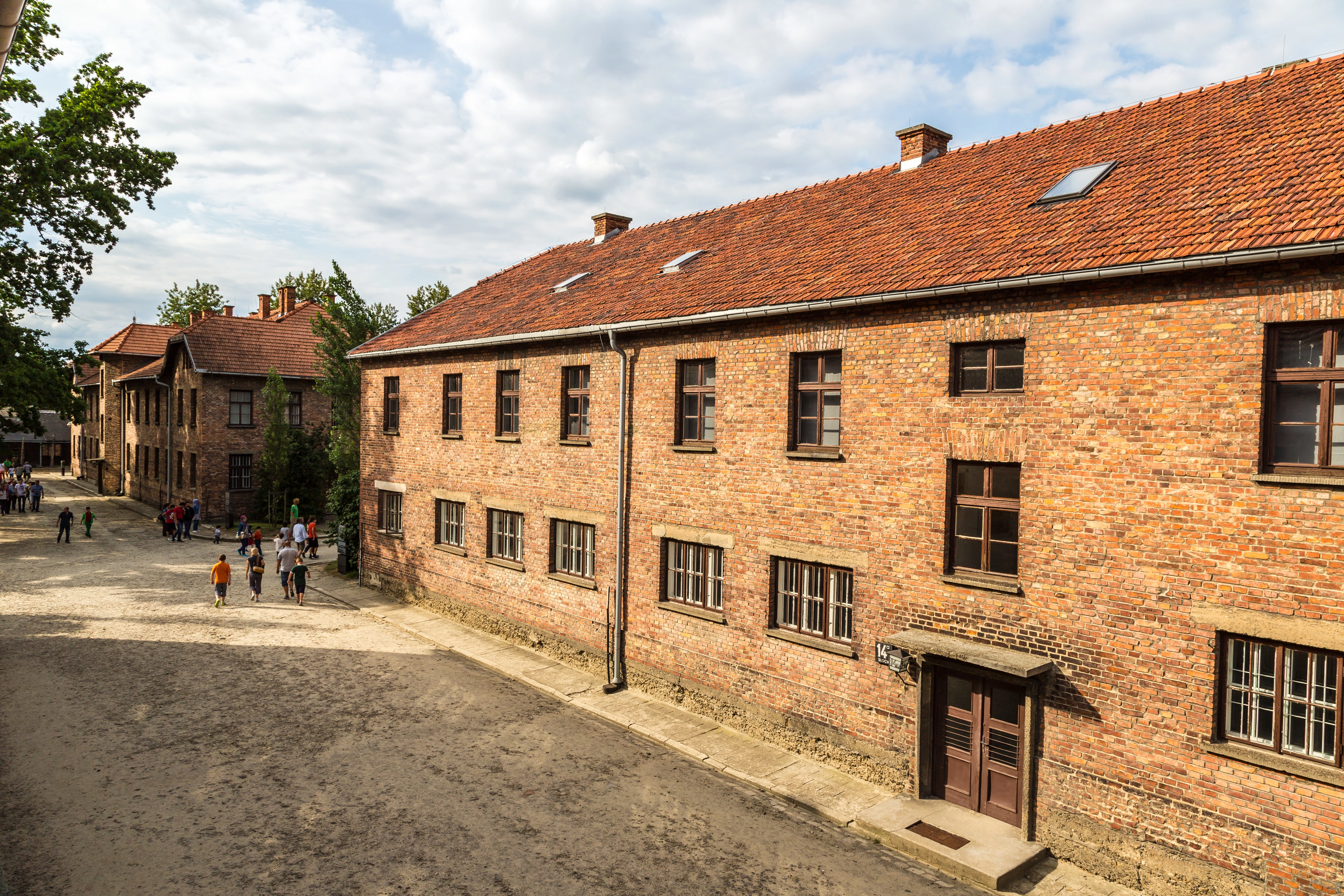
Auschwitz or Auschwitz Birkenau German Nazi Concentration and Extermination Camp (1940–1945), was a network of Nazi German concentration and extermination camps built and operated by the Third Reich in Polish areas annexed by Nazi Germany during World War II. It was the largest of the German concentration camps, consisting of Auschwitz I (the Stammlager or base camp); Auschwitz II–Birkenau (the Vernichtungslager or extermination camp); Auschwitz III–Monowitz, also known as Buna–Monowitz (a labor camp); and 45 satellite camps. On January 27, 1945, Auschwitz was liberated by Soviet troops, a day commemorated around the world as International Holocaust Remembrance Day. In 1947, Poland founded a museum on the site of Auschwitz I and II, which by 1994 had seen 22 million visitors—700,000 annually—pass through the iron gates crowned with the infamous motto, Arbeit macht frei ("work makes you free").
In 1947, Poland founded the Auschwitz-Birkenau State Museum on the site of Auschwitz I and II, and in 1979, it was named a UNESCO World Heritage Site.
Most Recent
- On One of the Most Scenic Railways in the World, Switzerland Breaks Record for Longest Train
- Celebrity Beyond's "GOAT" Godmother Christens Ship; Sets it Sailing in its Inaugural Caribbean Season
- 3 Unique Ways to Get Active Outdoors in French St. Martin
- This New Cruise Ship will House its Own Exclusively-Designed Fabergé Egg
- The Cayman Islands - Hotels for Every Type of Traveller
 Aruba

 Bermuda